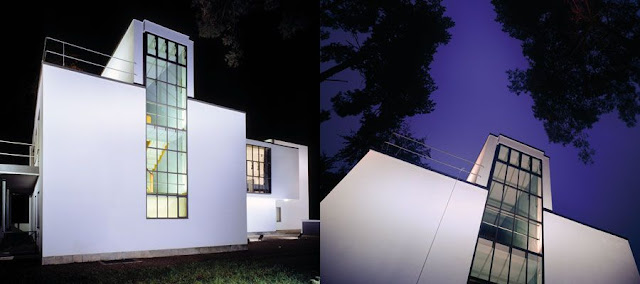
Thank goodness the Bauhaus movement survived down to our modern world of industry, with its teachings methods that stressed the need for rational, and practical approach to design. The Bauhaus aim as we know it, was created to bring together all the arts under primacy of architecture. And so today, when I go through a number of shelter magazines, books, and online design websites that highlight this much beloved design principal in the 21st century, all I can say is: Thank you Walter Gropius!
Category: Architecture
Contemplating the Genius of Place & The Places of Geniuses
the concept of sweet melancholy.
In A Class By Herself
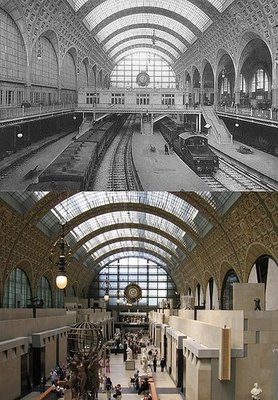
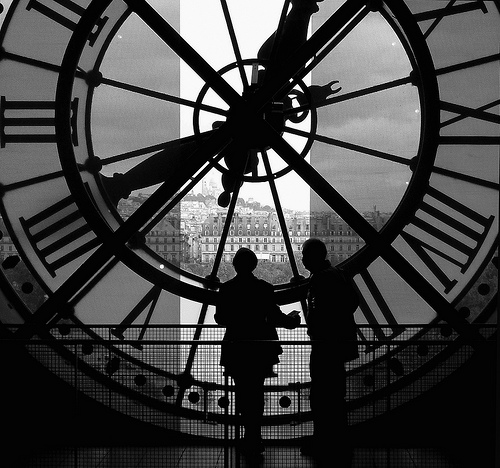
If I’m not mistaken, you’re the kind of person who truly enjoy unparalleled design, and that’s why I believe you’ll be pleased to see the striking work of Gae Aulenti splashed all over this blog today. Many of you may already know that Gae (pronounced Guy) was the Italian architect who sadly passed away on November 1st. She was known for, and responsible for some of the most extraordinary designs of the 20th Century. One of which being the famous Musée d’Orsay in Paris.
Virtually every single piece of her iconic furniture and lighting designs are in high demand right now. This is no big surprise since most artists are even more famous after death (I am by no means suggesting that she wasn’t while she was alive). The beloved designer, who died a few weeks after her 84th birthday, was one of the first female Post War Italian architects and is best known for transforming old buildings into modern museums, including Paris’ Musée d’Orsay and the Asian Art Museum of San Francisco. Her undisputed legacy includes a trove of modern residential and commercial furniture designs that showcase her collaborations with such illustrious manufacturers as Poltronova, Knoll, Artemide and Casabella.
Gae Aulenti: “Means” armchair for Poltronova Italy, circa 1967. Metal frame, fabric covering featuring a pattern of orange and brown circles specially designed for this model. Compasso
My Kind of Town
Illustrated by Ollywood
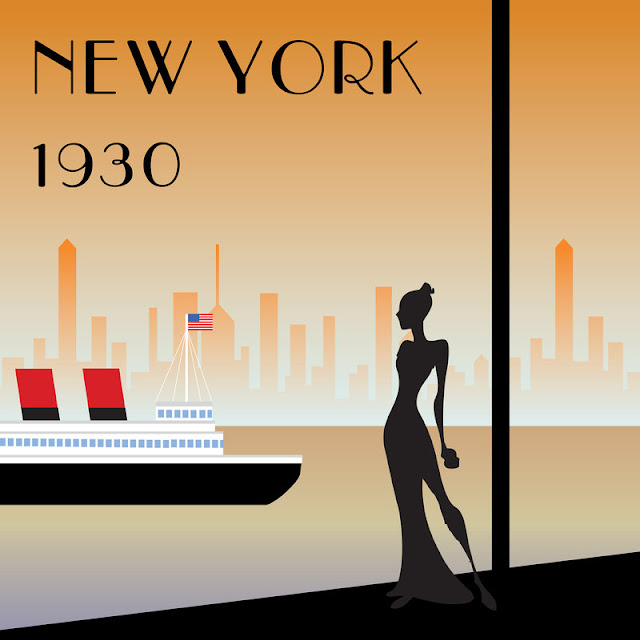
New York, once again, took center stage in the world’s scene this week. Hurricane Sandy came, and left a devastating impact, not only in this great city but throughout the east coast. New Yorkers are no strangers to tragedy, and overall, they are to be saluted not only for the spirit they showed, but also for how they handled the latest dark chapter in their lives. This hurricane was the biggest storm that ever hit the big apple, and nothing can take away the tragic consequences that it left in the lives of so many whom were directly affected. But in the face of this horrible experience, I couldn’t help but notice the beauty that still surrounds us, whenever I walked down the streets of this whistle stop. I marvel at its famous skyline. The sheer size of it all is simply astonishing!
The prodigious Art Deco architecture that is now an intricate part of so many of our lives is a clear reminder that in a resilient town like this one, New Yorkers themselves have an uncommon knack of being survivors. In the face of adversity, they too can become a beacon of hope that is synonymous with these prominent buildings. Sandy baby, you can never take that away from us.

Never overshadowed: The Chrysler Building under fog. New York is arguably one of the most popular jazz cities in the world
America’s Prettiest Towns
Did you know that Newport, Rhode Island has one of the highest concentrations of colonial homes in the nation? You can found them downtown Newport Historic District, one of three National Historic Landmark Districts in the city.
Number 5
NOTE: Please notify us directly, if you believe that certain images on this post are alleged to infringe upon the copyrights of others, according to the Digital Millennium Copyright Act (DMCA). Thank you.
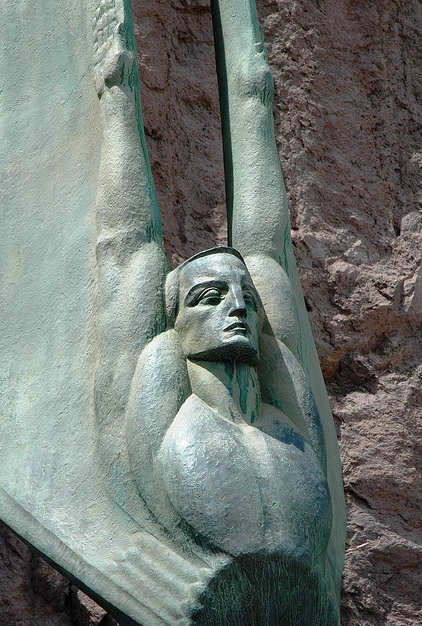
The Hoover Dam: Why Is It Art Deco?
Dedication Plaque by Henry Yim
And I think we can all agree that this is a grandiose piece of architecture. The Hoover Dam graceful curve and Art Deco style contrasts with the stark landscape of the Black Canyon of the Colorado River over which it was built. Back in 1935, Los Angeles-based architect Gordon Kaufmann was brought in and assigned to streamlined the design, and he applied an elegant Art Deco style to the entire project (this was done with some much needed help from Denver artist Allen Tupper True).
NOTE: Please notify us directly, if you believe that certain images on this post are alleged to infringe upon the copyrights of others, according to the Digital Millennium Copyright Act (DMCA). Thank you.
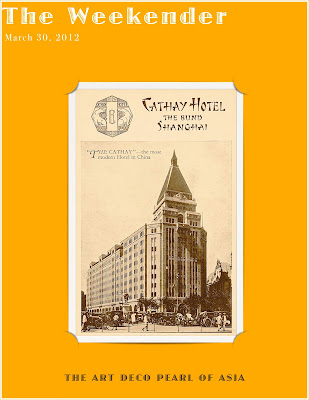
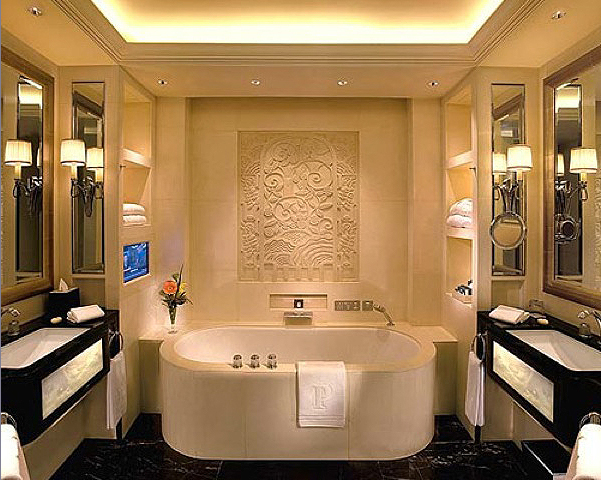
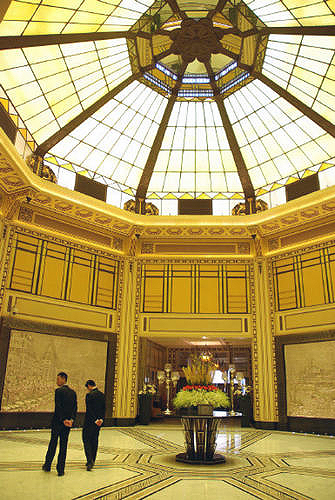
The Weekender: Shanghai: the Art Deco pearl of Asia
Please join me in welcoming our guest blogger, Richard Rabel. Richard is a New York-based interior designer and art advisor, with a keen eye for some of the most exquisite objets d’art and design. A multi-linguist with a ten-year career as a senior officer and specialist in a London-based international auction house, twenty years of art and design study and over thirty years of international travel, Richard has lived in seven countries and has had access to some of the most exquisite and exclusive spaces. From San Francisco to Mexico City, Sao Paulo to Geneva, Istanbul to Delhi and Sydney to Shanghai, the breadth of his travels has cultivated his eye and contributed to defining his exacting taste and modern aesthetic.
NOTE: Please notify us directly, if you believe that certain images on this post are alleged to infringe upon the copyrights of others, according to the Digital Millennium Copyright Act (DMCA). Thank you.
The Weekender: Chateau du Portail
Marie Antoinette: The Trendsetter and Her Domain
The Petit Trianon, Marie Antoinette’s former domain, is a masterpiece neoclassical architecture situated in the grounds of the magnificent Chateau Versailles. Whenever I visit this part of France, I’m reminded how this charming piece of architecture is as celebrated today as it was hundreds of years ago. It is an exemplar of the history of taste and of the arts in the 18th century as a page of France social and political history that went through a glorious renovation in 2006, with the help of a generous $6 Million donation from their sponsor Montres Breguet. I can talk quite a bit about this little gem of a place.
Marie Antoinette whose full name was Josepha Johanna von Habsbourg-Lothringen, Archduchess of Austria, Imperial Princess, Royal Princess of Hungary and Bohemia, Dauphiness of France, Queen of France and Navarre
Where do I start? How about the château itself, which was designed so that the royals could avoid the presence of their servants, or the troupe l’oeil wood panelling which were used for the less important rooms as a cost-saving measure? Everything about the Petit Trianon embodies the pefection of an era and society, its style and technical expertise. While Versailles represents power and splendor, the Petit Trianon represented serenity and privacy.
The Eiffel Tower for Auction
since it’s opening more than a century ago.


.jpg)