High End Weekly’s Year on Art, Design, and Fashion

Audrey Hepburn

Audrey Hepburn tops our Number 10 List this year as the most popular post. No surprise there. She was the face of grace and elegance, and everything stylish. And eventhough she exited the world’s stage in 1993, she remains an inspiration and role model for millions of women all over the world.

Other memorable stories were my Q&A with furniture designer John Lyle, my series on the awesome works of Fernand Léger, The Kips Bay Decoration Showhouse, and more.


No. 2
Higher Grounds: Twiggy with Richard Avedon

What strikes me the most about Twiggy is that she has remained strong and confident throughout her career, and her popularity hasn’t waned as seasons passed. This is quite a feat considering that most models and actors usually do not experience this outcome.

No. 3
A pretty pair of pink wing chairs from Leah Antiques, as well as painting of Joan Collins from the early 1960’s take center stage in this exceedingly lively room. 
No wonder Joan Collins chose John Lyle to design her New York City apartment, as she got ready to sell it through Core Real Estate. He is so intuitive, plus it doesn’t hurt to have a marvelous eye for great design.
No. 4
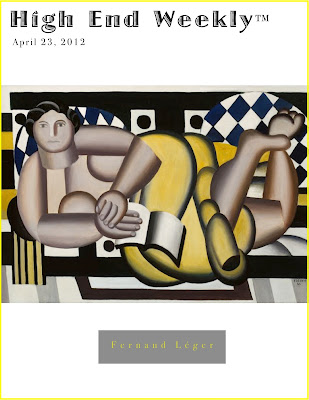
Fernand Léger
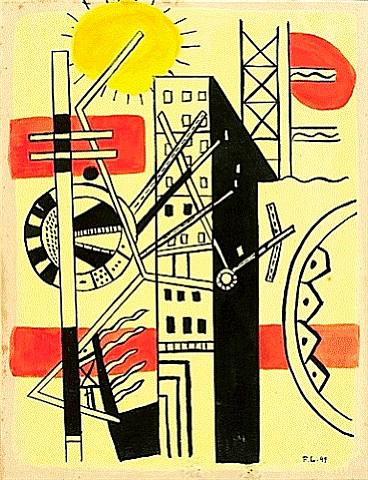
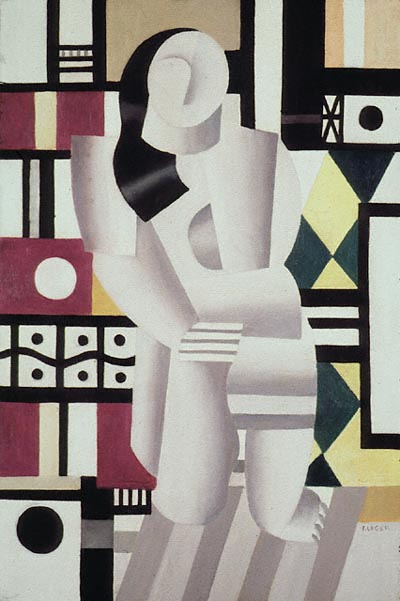
Fernand Léger’s work in the 1920s made his international reputation. They combined that certain quality of surrealism and the strong characteristic of the plain forms which he came to be known for.
No. 5
Eileen Gray Transat Chair
As an architect, Eileen Gray designed and furnished herself a new home, Tempe à Pailla, outside Menton, France. That building is an icon of Modernist architecture, and the design was an awesome example of form meets function.
No. 6
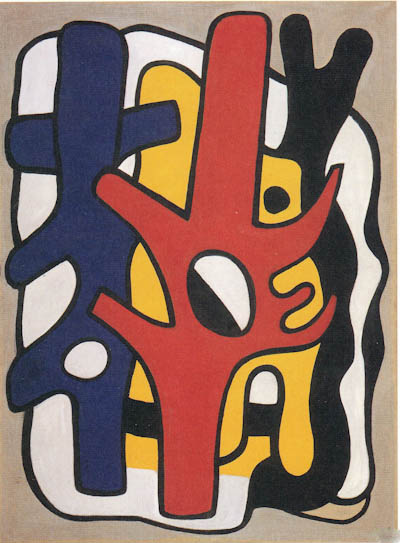
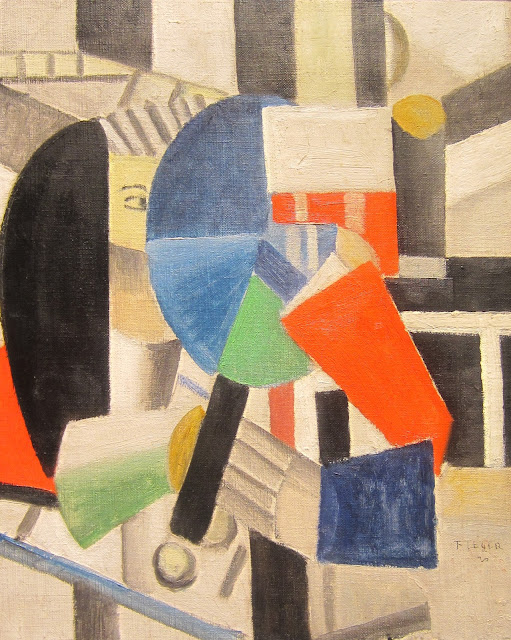
Composition, 1940 – 1942, oil on canvas – Fernand Léger
Image via 1artclub
With all the glory that later came as being a blue chip artist, Fernand Léger’s career spaned from early investigations of painting as a means of capturing modern sensations in abstract and near abstract dynamic compositions to heroic images of common life.

No. 7
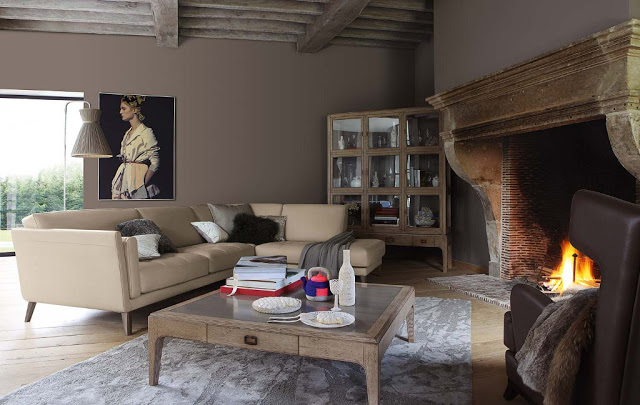
Furniture trends tend to follow not just changing tastes, but changing needs as the ways in which we live our lives alter over time.
No. 8
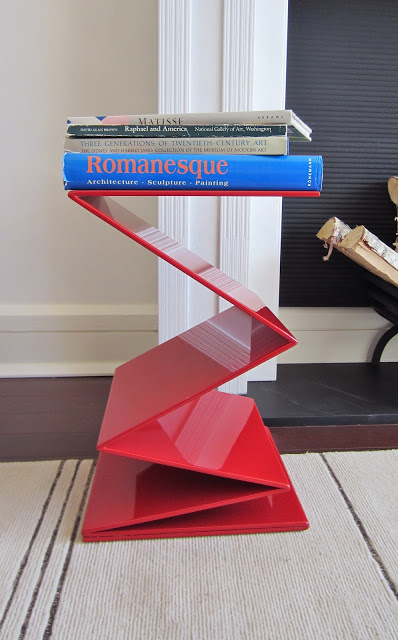
Custom made red Zig Zag table stands as a tribute to the late designer Albert Hadley
Raji Radhakrishman’s Le Bureau Privé
The Curator’s Office
No. 9
Metal Boy Cabinet
Most Americans would agree that the kitchen is one of the most important room in a house, and should be treated as such. And de Giulio is happy to prove that point by providing them with some of the most inspiring kitchens to “live with”.

No. 10
Christian Deydier, Corice Arman, Xavier Samson
A global group of esteemed guests both from the US and France, gathered at the French Consulate in March 2012 to celebrate the official announcement of the Biennale des Antiquaires which took place on September 14 through the 23rd.

Designer’s Top Picks

Dahling, You Look Marvelous: Etoile de Mer mirror by Thomas Boog

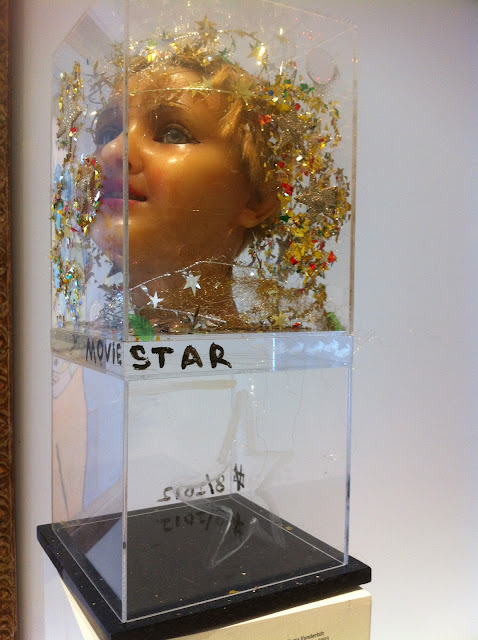
Ready when you are Mr Demille… Movie Star by Gloria Vanderbilt, 1stDibs
Photo courtesy High End Weekly
Chaotic poetry: Geometric wonders: Herve Van Der Straeten Sconces
Iconic Gio Ponti Candelabra from Christofle
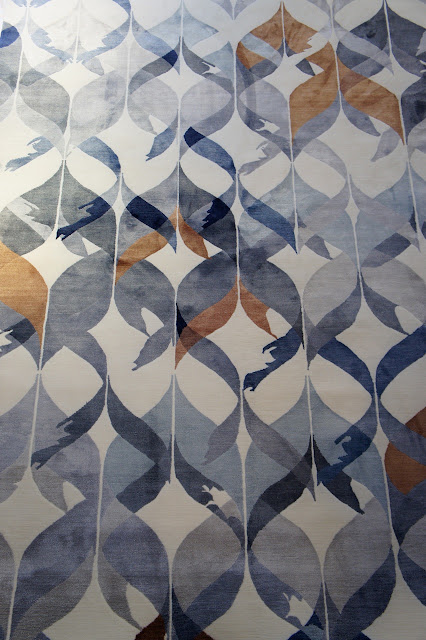
All laced up: The Hello Gorgeous rug is ubber chic and glamor personified
Power to the people: Fernand Leger, Le Cirque Tapestry
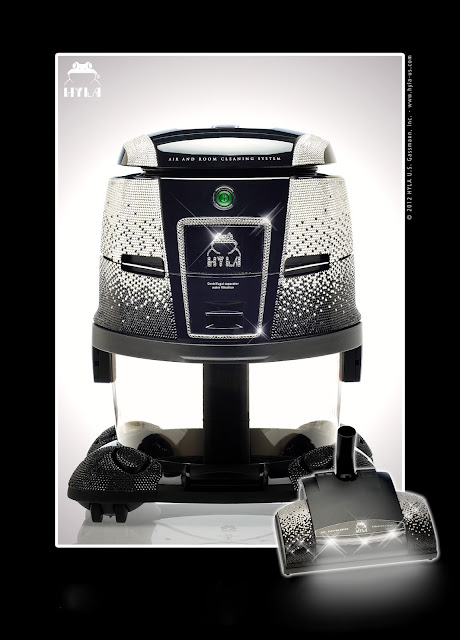
Domestic Bliss: German Engineering: The world’s most expensive and luxurious vacuum cleaner. Artists in Berlin, Germany have taken 
over 100 hours to hand-encrust the HYLA GST with 32,000 genuine Swarovski Elements
Hyla-usa.com

NOTE: Please notify us directly, if you believe that certain images on this post are alleged to infringe upon the copyrights of others, according to the Digital Millennium Copyright Act (DMCA). Thank you.

Fernand Léger: The Original Granddaddy of Pop Art

3 of 3 on our series of the legendary paintings of Fernand Léger  
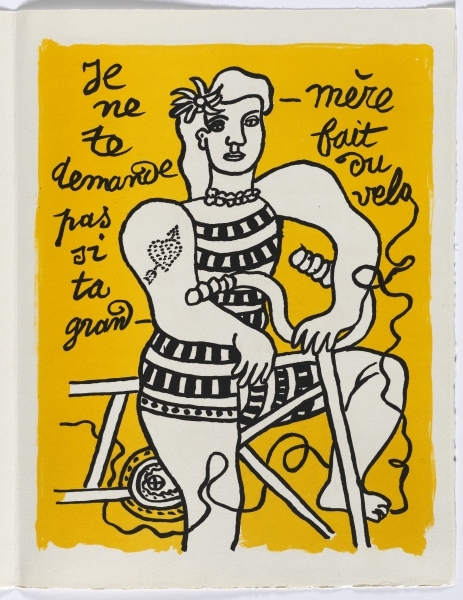
This is the last installment of my three part series on the legendary paintings of an extraordinary artist. Although I am certain that this won’t be the last time that his name or work will come up on this blog. I thought it was interesting that Fernand Léger joined the Communist party once he returned to France in 1945 after living in the US. During that time, he made a rather large mosaic for the church of Assy between 1945-1949. Léger did the decor for the ballet Le pas d’acier, in Paris in 1948, and continued to produced several book illustrations.

Fernand Léger, La Joie De Vivre, 1955
Signed F. Leger (lower right) Oil on canvas
Photo courtesy High End Weekly™

Fernand Léger, La Femme Au Mirror, 1920
Signed F. Leger and dated, Oil On Canvas
Photo courtesy High End Weekly™
Fernand Léger
After a design by Fernand Léger, La Femme Au Perroquet
Bearing the signature F. Léger (lower right), Mosaic executed by Heidi Melano
after an original work by Fernand Léger
Photo courtesy High End Weekly™
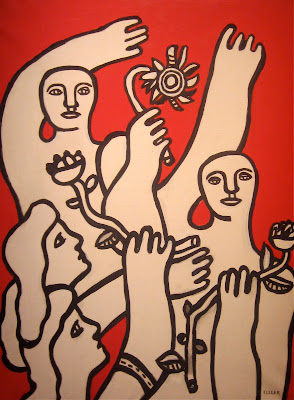
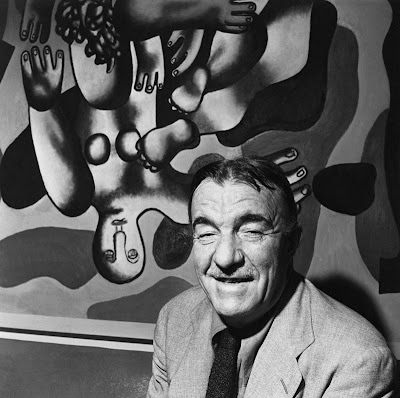
Fernand Léger, Visage aux 2 mains
Fernand Léger, The Tree, 1925
Image via Anticipated Stranger
In 1949, he made designs for ceramics executed at Biot in my all-time favorite place – The South of France. It was there that he established his ceramic workshop. In 1960 a Léger museum was created in Biot in honor of his vast contribution to the art world. During the later part of his life, he made several designs for a number of stained glass windows, and painted murals for the assembly hall of the United Nations. I am attracted to the fact that Fernad Léger could of painted a number or top officials, and high society folks, but instead directed his body of work towards honoring the life of ordinary people.

Vyna St Phard next to design after Fernand Léger
La Femme au Perroquet, Sotheby’s, NY


Photo courtesy High End Weekly

NOTE: Please notify us directly, if you believe that certain images on this post are alleged to infringe upon the copyrights of others, according to the Digital Millennium Copyright Act (DMCA). Thank you.

Fernand Léger: The Original Granddaddy of Pop Art


2 of 3 on our series of the legendary paintings of Fernand Léger
Fernand Léger’s work in the 1920s made his international reputation. They combined that certain quality of surrealism and the strong characteristic  of the plain forms which he came to be known for. His work was also associated with Purism and with the De Stijl artists. In 1924, he made the film Mechanical Ballet with renowned artist, Man Ray. The paintings he created in the 1920s were done for architectural settings, they were mainly abstract, while others used simplified motifs.

Fernand Léger
Fernand Léger
Fernand Léger
Fernand Léger, Jazz
Fernand Léger, 1917 – Study of the partica of letters
Fernand Léger, 1954
Fernand Léger, Shell Leaf
Fernand Léger, 1929
Fernand Léger, 1918, Mechanical compositions

Fernand Léger
Fernand Léger, 1923, Fruits and Vegetables, Pear Compotoir
Fernand Léger, 1927, Woman holding a vase
Fernand Léger, Women in an interior, oil on canvas
Photo via Azure Bumble
Fernand Léger, February 4, 1881 – August 17, 1955

Examples of these sorts were included in Le Corbusier’s Pavillon de l’Esprit Nouveau at the Paris Decorative Arts exhibition in 1925. Léger was fascinated with technology, machinery and the increased speed with which modern life was being lived. He translated this fascination into his art by simplifying forms into tubular structures and reducing colors to monochromes, primaries and secondaries. His need to conjure up the intense and unsettling experience of modern life was quite apparent in all his paintings.


NOTE: Please notify us directly, if you believe that certain images on this post are alleged to infringe upon the copyrights of others, according to the Digital Millennium Copyright Act (DMCA). Thank you.

Fernand Léger: The Original Granddaddy of Pop Art

1 of 3 on our series of the legendary paintings of 
Fernand Léger 
With all the glory that later came as being a blue chip artist, Fernand Léger’s career spans from early investigations of painting as a means of capturing modern sensations in abstract and near abstract dynamic compositions to heroic images of common life in terms that admit their debt to the great tradition of French classicism and to folk art.

Adam and Eve, 1934, Fernand Léger. Image via ARTinvestment

His paintings affirmed contemporary life as well as art’s energies. After years of admiring the granddaddy of pop art, I was able to collect (via the power of Google, of course) dozens of his art work – the ones that spoke directly to me.

Fernand Léger
Fernand Léger
Composition, 1940 – 1942, oil on canvas – Fernand Léger
Image via 1artclub
Fernand Léger
Face and Hands, 1952, Ink on paper – Fernand Léger
Image via MOMA
Jazz, Fernand Léger
Tres mujeres, 1921, oil on canvas – Fernand Léger
Image via MOMA
Untitled, 1950, Lithograph – Fernand Léger
Image via Léger Prints
Cirque, Original Lithograph, Fernand Léger
Femme a genou “Pochoir”, 1929, Fernand Léger
Image via WearePrivate
 La Lecture, 1924, Fernand Léger
Image via Centre Pompidou

This is the first of three posts about Léger’s work. Fernand Léger (1881 – 1955) was a French painter, son of a Norman cattle-breeder. He was a trained architect who moved to Paris at the turn of the 20th Century. While living in the city of lights, he studied painting, moved in the social circle of the great artists at that time: Apollinaire, the Delaunays and the poet Cendras. His art was deeply influenced by Cézanne. After the showing of his first major paintings in 1911, he developed his form of Cubism, dominated contrasts of form and color, positive and negative, at times in abstract compositions.


NOTE: Please notify us directly, if you believe that certain images on this post are alleged to infringe upon the copyrights of others, according to the Digital Millennium Copyright Act (DMCA). Thank you.