Fernand Léger: The Original Granddaddy of Pop Art

1 of 3 on our series of the legendary paintings of 
Fernand Léger 
With all the glory that later came as being a blue chip artist, Fernand Léger’s career spans from early investigations of painting as a means of capturing modern sensations in abstract and near abstract dynamic compositions to heroic images of common life in terms that admit their debt to the great tradition of French classicism and to folk art.

Adam and Eve, 1934, Fernand Léger. Image via ARTinvestment

His paintings affirmed contemporary life as well as art’s energies. After years of admiring the granddaddy of pop art, I was able to collect (via the power of Google, of course) dozens of his art work – the ones that spoke directly to me.

Fernand Léger
Fernand Léger
Composition, 1940 – 1942, oil on canvas – Fernand Léger
Image via 1artclub
Fernand Léger
Face and Hands, 1952, Ink on paper – Fernand Léger
Image via MOMA
Jazz, Fernand Léger
Tres mujeres, 1921, oil on canvas – Fernand Léger
Image via MOMA
Untitled, 1950, Lithograph – Fernand Léger
Image via Léger Prints
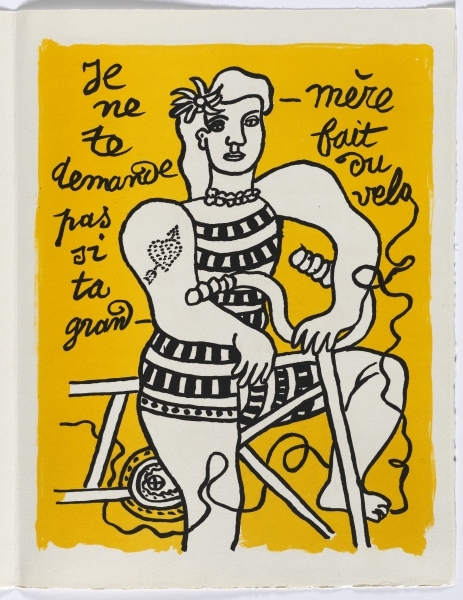
Cirque, Original Lithograph, Fernand Léger
Femme a genou “Pochoir”, 1929, Fernand Léger
Image via WearePrivate
 La Lecture, 1924, Fernand Léger
Image via Centre Pompidou

This is the first of three posts about Léger’s work. Fernand Léger (1881 – 1955) was a French painter, son of a Norman cattle-breeder. He was a trained architect who moved to Paris at the turn of the 20th Century. While living in the city of lights, he studied painting, moved in the social circle of the great artists at that time: Apollinaire, the Delaunays and the poet Cendras. His art was deeply influenced by Cézanne. After the showing of his first major paintings in 1911, he developed his form of Cubism, dominated contrasts of form and color, positive and negative, at times in abstract compositions.


NOTE: Please notify us directly, if you believe that certain images on this post are alleged to infringe upon the copyrights of others, according to the Digital Millennium Copyright Act (DMCA). Thank you.

Contemporary Art Sales at Sotheby’s, New York

Iconic Post-War American Art
Roy Lichtenstein’s Sleeping Girl, 1964
36″ x 36″
Estimate: $30 – $40 Million
“Sleeping Girl is one of the great masterpieces of the 20th century, counting iconic depictions of women by Pablo Picasso, Constantin Brancusi and Amedeo Modigliani among its peers,” commented Tobias Meyer, Sotheby’s Worldwide Head of Contemporary Art.


Cindy Sherman, Untitled Film Still #21
Estimate: $150,000 – $200,000
Untitled Film Still #21 is perhaps one of the most profound images that grew out of the second wave of the feminist movement. The 1950’s working girl has been transformed into a confident 1970’s businesswoman ready to assert herself upon the metropolis that surrounds her. Throughout the Untitled Film Stills series Sherman charts the evolution of the role of women from damsels in distress to women in control of their destiny. Nowhere is this transformation more clearly felt than in Untitled Film Still #21.
Gerhard Richter
The Cindy Sherman Film Still will lead Sotheby’s Mid-Season Contemporary Art Sale which is scheduled for Friday, March 9th. The celebrated series sees the artist cast herself as a modern 1970s businesswoman surrounded by the urban jungle. Sherman is widely recognized as one of the most important female artists of her generation and Untitled Film Still #21 appears at Sotheby’s as a major retrospective of the artist’s work that will go on view at The Museum of Modern Art in New York. All works in the sale go on view at the auction house this Saturday, March 3.
On Wednesday, May 9th, Sotheby’s will hold another important evening sale, which will highlight one of my favorites Roy Lichtenstein’s work – Sleeping Girl from 1964. The sexy blonde women of the comic book series are not only one of the most instantly recognizable icons of the Pop Art movement but continue the long, rich tradition of artists’ celebrations of the sleeping female form. Paintings from this series are featured in the collections of major institutions throughout the world such as the Museum of Modern Art, New York and this work has remained in private hands for the past 48 years. Like Picasso, Lichtenstein was fascinated by women but in contrast to the modern master, works like Sleeping Girl are a vehicle for his innovation and contribution to 20th century art history, rather than homage to specific women.

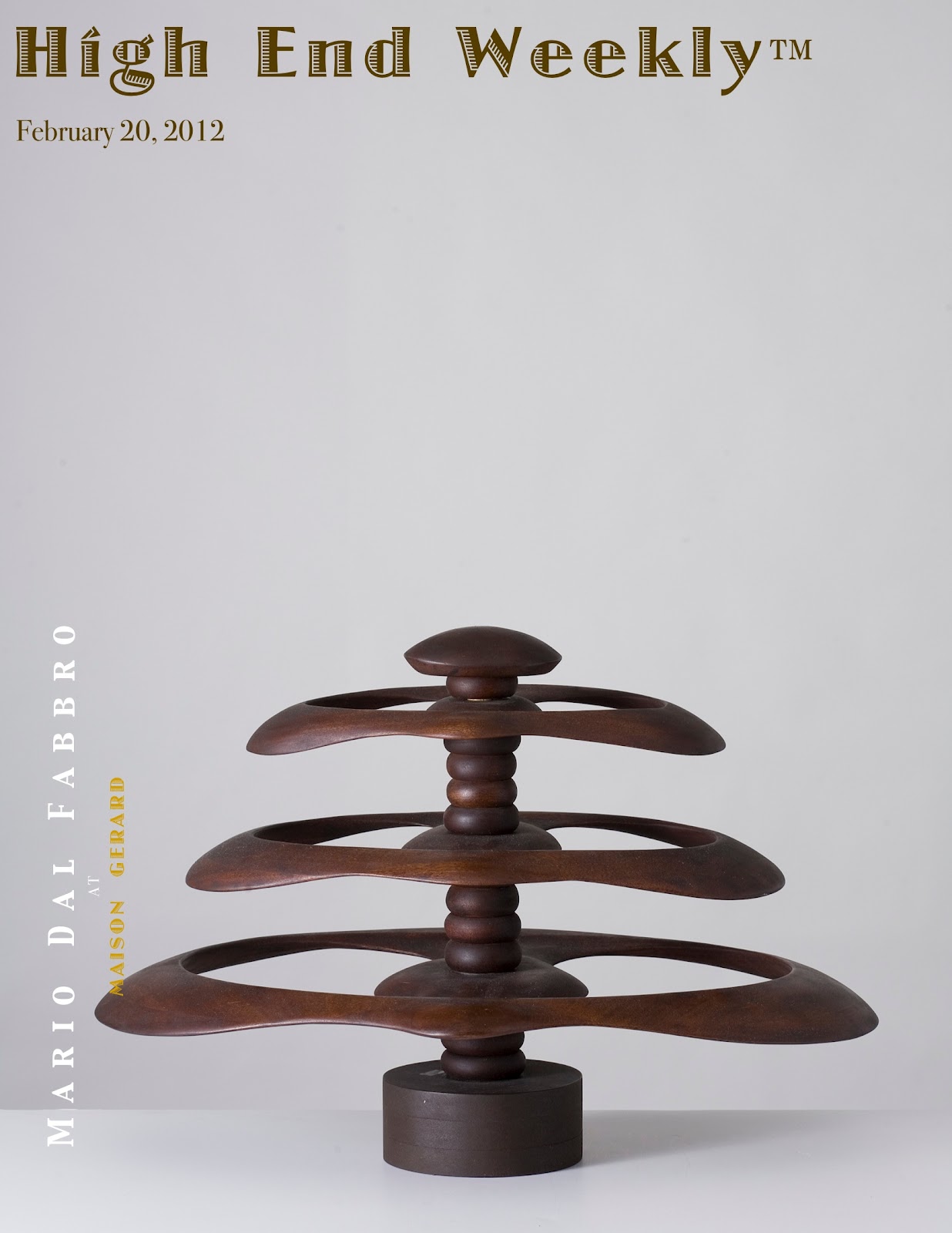
Mario Dal Fabbro at Maison Gerard


“My goal is to represent spatially the complexity of profiles, the dimensions of forms which constantly seem to rearrange themselves in space and set themselves between the empty space and the concrete form.” Mario Dal Fabbro


Direction Optical, Carved Wood Sculpture, 1968
by Mario Dal Fabbro (1913 – 1990)
H: 17 1/2″ x W: 25″ x D: 16″
Signed and dated


Three Squares, 1971
H: 22″ x W: 18″ x D: 6″
Signed, and bears an original tag
Dal Fabbro was born into a family of furniture-making craftsmen in Capella Maggiore, Treviso, Italy. He studied in Venice at the Institute for Decorative and Industrial Arts and at the Regio Magistero Artistico, majoring in art and design and graduating with honors in 1938.
Untitled, 1982
H: 6 1/2″ x W: 16″ x 4″
Signed and dated
He has authored over 20 books on furniture design, created works that are sensuously anthropomorphic and while reminiscent of Brancusi have an even more tactile quality due to his choice of woods.
Birds at play, 1972
H: 19″ x W: 22″ x D: 12 1/2″
Signed, dated, and inscribed
In his later career, Dal Fabbro focused solely on his sculpture, perfecting his transformation of wood into his signature fluid and dynamic shapes. This exhibition at Maison Gerard is the latest in an ongoing series showcasing artists who are little known outside the collector’s market but whose work is important and noteworthy today.
Untitled, 1978
H: 23″ x W: 5 3/4″ x D: 8″
Signed and inscribed

Photos courtesy: Maison Gerard
All rights reserved

“I personally love the effortless quality of his work, the purity of form, which is the thread throughout the body of work…” Benoist F. Drut, Maison Gerard
Mario Dal Fabbro Sculpture: Opening Reception: Wednesday, February 22nd – 6 – 9 PM
Exhibition from Thursday, February 23 – Friday, March 30, 2012
Artists are a rare breed, and their actions are usually misunderstood. How do you explain why someone as creative and imaginative as Mario Dal Fabbro chose not to sell his important sculptures during his lifestyle? I don’t pretend to know the answer to that, but I do know that many art collectors are thankful that the  wait is over.
Starting this Thursday, until March 30th, Maison Gerard will feature and sell 40 rare and exquisite wood sculptures by the artist and mid-century furniture designer at their swanky gallery, located at 43 East 10th Street. RSVP (rsvp@maisongerard.com) for this event, because quite frankly, you won’t regret it.

In his lifetime, the esteemed sculptor only exhibited his works but never allowed them to be sold. Known for his seductive abstract forms, and his connection to the wood is evident in the way he highlights the natural beauty of its density, color and grain. The result is the constant interaction of solid and void, mass and movement, for pieces that are supremely architectural and structured yet sensuous and tactile. He was trained as a sculptor but took an active role in the family furniture business. I will look for you at the party in order to entertain your feedback for this special sale and exhibition at Maison Gerard. Are you thinking of purchasing one of these sculptures, and if so, which one? Look for my feedback of the preview party at the News and Events Secion at the Devenish Group, this coming Friday. See you soon.

The Weekender: The Winter Antiques Show & The Bard

The Importance of Being Fashionable
A couple of days before I went to a Press Preview at the Bard Graduate Center, I had no idea who Jane Harding was. Although the actress was not so well known here in the United States, back in France, she was all the rage. It is said that during her lifetime, Ms. Harding was one of the most photographed women in the world. Enter Staging Fashion, an “absolutely required” exhibition for fashionistas, and those who are so enthused by the celebrity culture.

Woman’s Hat by Joseph G. Darlington and Co. Philadelphia, circa 1908 – 10.

Straw, silk flowers and leaves.

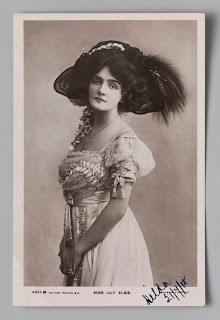
The show is mostly about how celebrities like Jane Harding, Lily Elsie, and Billie Burke dominated the fashion scene back in the early 20th Century. They managed to do so by one important medium – Photography. Carefully staged photographs represented a vital self-promotional tool by which the actresses asserted their status as Fashion Arbiters. Sound very much like our current culture right? Back then, the images by Harding emphasized an image of an attractive, elegantly dressed, and poised woman, who offered herself for admiration and at the same time, scrutiny. A close collaboration between photographers and actors was crucial back then as it is today. The promotional interest between the media to its public is phenomenal and is ever increasing. In this sophisticated exhibition, Fashion and Theater came together beautifully to form a brilliant and lasting marriage.

January 18 – April 8, 2012
The Bard Graduate Center
18 West 86th Street
New York City

Left: Reutlinger Studio (French, 1850-1937). Postcard of Jane Hading in La Pompadour, ca. 1901. Hand-colored photograph with glitter. Private collection. Photographed by Bruce White. Right: Foulsham & Banfield (English, 1906–1920). Postcard of Lily Elsie in The Merry Widow, ca. 1907. Private collection.
Photographed by Bruce White.
Advertisement for Rogers & Thompson’s Soirée Silk featuring Billie Burke. Photograph by Sarony Studio. From The Theatre (September 1916): 165. Private collection. Photographed by Bruce White.
Jane Hading: Paul Boyer. Jane Hading in Plus que Reine. Cover of Le Théatre (May 1899). Private collection. 
 Photographed by Bruce White.
Postcard of the Théâtre du Vaudeville and the Boulevard des Italiens, ca. 1905. Hand-colored photograph. Private collection. Photographed by Bruce White

All photos courtesy of the Bard Graduate Institute.
© All Rights Reserved
The Winter Antiques Show 2012

The illustrious Winter Antiques Show opens today at the Park Avenue Armory for the 58th Year in a row. This year, be prepared to get reacquainted with old dealers and meet new ones. Jonathan Boos is displaying an impressive collection of Alexander Calder’s standing mobiles.

Originally gifted by the artist to a family who cared for his mother in the 1950’s, these pieces were kept there for over 50 years and now are ready to embrace a new home. Highlights from the show included a rare and important African-American Pictographic Plantation desk, ca. 1870, from Madison, Mississippi. This particular desk is attributed to “Willie” Howard, a favored slave at Kirkwood Plantation, owned by pre-Civil War Governor McWillie. Art Deco dealer, Maison Gerard, have several new acquisitions from Leuleu. They are exquisite and offer themselves as perfect additions to any art deco collector. Another exciting dealer to look for is Keshishian. Mr. Eddy Keshishian, a carpet dealer from London, is exhibiting a jaw-dropping Art Deco carpet made for the Maharajah of Indores palace. This magnificent piece demonstrates the widespread appeal of Art Deco design, which was originated in France and quickly spread as far as India. Go inside the show, by visiting us on Facebook, for more photographs. The Winter Antiques Show benefits the East Side House Settlement which was founded in 1891 to help immigrants and lower income families on the East Side of Manhattan. In 1962, it moved to the South Bronx where it serves 8,000 residents annually within one of America’s poorest congressional districts, the Mott Haven section of the South Bronx.

My Fair Ladies
Quintessential Victorian fairies from the 19th Century
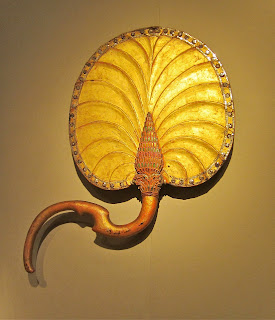
Clockwise: From Nicholas Grindley Works of Art, Ltd. A ceremonial fan of circular leaf shape made of three boards crudely joined together and carved on the face with radiating ribs with an incurved lip at the top. Thai, 18th – 19th Century. Egyptian gilded and painted cartonnage mummy mask. Ptolemaic Period, c. 4th – 3rd century BC, from Rupert Wace Ancient Art. Foreground – One of three remarkable series of Alexander Calder standing mobiles (untitled) from Jonathan Boos

Photos property of High End Weekly

Top 7


KIS – Keep In Shape
Crocodile Sport Gloves
Also available at OC Concept Store 
Red Leather Stripes Side Table 
The Impossible Collection of Cars by Dan Neil
Royal-Oud for men and women, the new sensation from the house of CREED
Fluorescent alkyd and epoxy paint on shaped canvas
from Frank Stella Conway II, 1965
Bilou Bilou Chairs
From the Winter 2011 Collection, Beige brown wool double grand Prince of Wales double breasted polo coat


NOTE: Please notify us directly, if you believe that certain images on this post are alleged to infringe upon the copyrights of others, according to the Digital Millennium Copyright Act (DMCA). Thank you.

The Weekender: The Scar Project

I think back on the time I met my friend David Jay at one of those trendy restaurants downtown on  September 11th, this year.  The city was quiet.  We started speaking about photography, and its power of communication. Then the conversation led to a photo of “Glee” star Heather Morris sporting a fake black eye, and how a message can be understood differently depending on the person.

David has worked in fashion for major publications in New York and overseas.  He has dedicated himself to having an impact on subjects that are quite often denied and he helped women deal with traumas that can be healed through understanding and acceptance.  Ultimately our discussion went into his upcoming exhibit –  The SCAR Project.
My interest was piqued, so I decided to check this installation, before heading back home.  I was taken by the fact that David Jay was thinking differently.  After viewing one image after the next, it became clear that he had a mission, not solely a statement.  He was not interested in showing in galleries per se but in museums.  His message goes towards women who suffer from being labelled as ghosts because they had breast cancer operations.  David’s work is about having an impact on people’s lives by creating a community and making them realize they are not alone, that they are human and dignity still exists even after surgery.
The SCAR Project composes a ballet of compassion.
Join them on their Facebook Fan Page where they have now reached over 20,394 “LIKE”.
Connect yourself, LIKE IT & SHARE IT
The SCAR Project
Openhouse Gallery
201 Mulberry Street
New York City
Opens Friday October 28, 2011
The exhibit runs through November 6th, 2011
Tickets can be purchased for the opening night gala 
gallery walks with SCAR Project photographer David Jay, 
and general admission (which is by donation)
Reserve your ticket at Eventbrite
I encourage you to see this amazing exhibition in its intended scale and viewing experience.
By Laurence Fayard

Picture Perfect!

René Magritte 
Dangerous Liaisons 
The Carlyle Hotel
981 Madison Avenue 
New York City
28 October — 1 December 2011
Blain|Di Donna is getting ready to present as its inaugural exhibition, Dangerous Liaisons, a survey of paintings, works on paper and objects by the Belgian Surrealist René Magritte.

What’ll you see at this noteworthy exhibit is over twenty five major oils, gouaches and drawings. This is the first Magritte show of this scale to be presented in New York in almost fifteen years, and comes at a time of renewed interest in Surrealism and its key exponents.
The exhibition’s title is derived from Magritte’s seminal early work, Les Liaisons dangereuses (1935), an enigmatic painting thought to have been inspired by the eighteenth century French novel of the same name, in which two rival lovers deploy sex as a weapon to humiliate others. As with many of the works in the artist’s oeuvre, it delights and disturbs in equal measure; uncanny, poetic, playful and erotic, it underlines his unsettling ability to pull at the threads of philosophical and psychological certainties, and in doing so eloquently sets the tone of the exhibition as a whole.

1950s Fashion

Ann Gunning by John French

Vintage Verner Panton
1962 Mini Austin Cooper
Not quite from the 1950s, but since Mini Cooper was founded in 1959, 
this classic beauty is the best looking one that we’ve found that was close to that period.

We love the 1950s’ style, and wanting to be constantly reminded of this glamorous era, 
last week, we brought this calendar through www.retrocalendar.com.

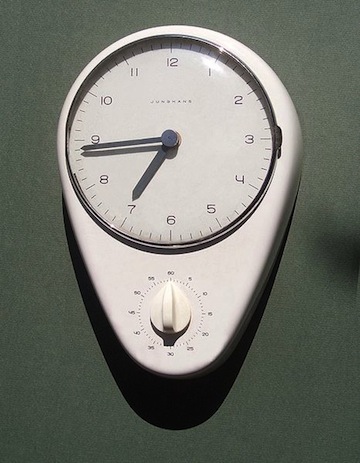
Junghans Kitchen Clock 1950s

Andy Warhol’s Pop Art

NOTE: Please notify us directly, if you believe that certain images on this post are alleged to infringe upon the copyrights of others, according to the Digital Millennium Copyright Act (DMCA). Thank you.
Art We Love This Week

A r t  For  E v e r y   B u d g e t

Saatchi Online provides the global community a new way to discover art and get discovered.  Whether you are a new or seasoned art collector, interior designer, or simply an art lover, you will be as engrossed as I was, once you’ve entered their online store and viewed hundreds of prints and original art.

Mindo Cikanavicius – Untitled

Saatchi Online is a partner to the Saatchi Gallery London, who recently re-launched, and quickly attracted over 60,000 new international artists and connected them with buyers. The site is a dream come true for interior designers, like myself, who can now browse through hundreds of art for their interior projects, and choose between a variety of design style, color or mood. You will find some distinguished amount of prints, original artwork, and even sculptors that fit any project at any budget.  I learned through their headquarters, based in Chinatown in Los Angeles, California, that the main goal of Saatchi Online is to help create sustainable careers for artists, by promoting art, finding buyers, and ultimately providing the opportunity to make more.  Saatchi Online is a thriving social marketplace, helping community members sell original works of art as well as prints. Originally conceived by Charles Saatchi, the new Saatchi Online is led by CEO Bruce Livingstone, founder of iStockphoto.  It is affiliated with the Saatchi Gallery and Charles Saatchi, who is a majority shareholder in Saatchi Online along with Balderton Capital.
Karien Deroo – Our Father
Susannah Martin – Fraulein

Christie’s Interiors Sale

Low-key elegance ruled at Christie’s Interiors Sale

In case you missed this month’s Christie’s Interiors Sale, I encourage you to keep their next one in mind, by visiting their website’s calendar. It was the kind of sale that was right for just about anyone’s budget, and this year, like the preceding ones before it, didn’t disappoint.

A pair of massive bone-inlaid oak vitrine cabinets Mid 20th Century 

During the three day sale, the gavel went down on several items for as low as $65! Now that’s what I call Recession Art. Darling, don’t we just love a bargain?

Although I personally didn’t buy a single item for myself during the July sale, I did familiarize myself with what was “on the menu” by rummaging through the pages of their catalogue, while I was traveling, a few weeks back. Two words stuck out on my mind, when I thought about writing this post – Easy Elegance. These pieces are perfect for the young art collector, or the individual with a secondary home in the country.  The bone-inlaid oak vitrine above is massive, yes, but it can be a good fit for a big or moderately sized room, providing that it remains the leading presence.
Charles Arnoldi (American, b. 1946)
Suitor
Enough spark to light a fire! This piece from Arnoldi is a great conversation piece, and adds just the right amount of color for a muted interior or a space that is in desperate need for some ambiance.
A sepik river mask from Papua New Guinea

Coming across the unexpected in any interior can be refreshing. I truly like the sense of whimsy, the geometric shapes and natural colors of this mask. I must admit that I envy the one who got away with it!

Claire Falkenstein (AMERICAN, 1908-1998)
Centrifugal III
I love art which carries a sense of movement. This shadow box from Falkenstein is a good beginning for those who are looking to start collecting some of her work. 

A gilt-brass and textured brown leather circular coffee table,
by William (Billy) Haines, Mid circa 1950

There was a fair amount of furniture from legendary Hollywood designer, William Haines, at the Interiors Sale, this year. So if you were able to snag a couple of his works, more power to you. I found this coffee table to be extremely sexy. With its gilt-brass geometric shaped legs, it fits right at home in the country or the city. And what’s more, it’s small enough to move around , when the occasion calls for it.

A set of six bronze, copper and gilt metal circular ashtrays, 
by William (Billy) Haines and Michael Morrison, circa 1050

Rustic chic! Instead of using these as ashtrays, I would have them around as serving trays when entertaining guests, or simply use them in the bathroom as soap dishes.

A red lacquered two tiered side table,
by William (Billy) Haines, circa 1950

There’s a primitive look to this table which is right for just about any type of interiors. A little red is just the right amount of color to accentuate any space. Plus it’s small enough to use as a bench when you’re in a pinch.

A pair of French oak and rush low chairs, Mid 20th Century

This pair brings to mind a “Provencal” setting. Giving the simplicity of its clean lines, the silhouette is quite alluring and believe it or not, they’re very comfortable (I sat on those myself during the viewing).

A set of three French oak stools,
late 19th/Early 20th Century

These circular top antique French stools could be quite useful in a library, don’t you think? Whenever I buy a table or a chair, I always look at its legs since that usually determine the common thread I’m seeking for the project. With their modern sensibilities and Eastern adaptations, these stools are a crowd pleaser.

A French oak curved bench, attributed to Guillerme et Chambron, Mid 20th Century
I can easily picture this bench with one of Ralph Lauren’s “summer house” colors which he currently carries. Either the bright orange, or the sultry yellow fabric will do. Yes, even William Morris would of been proud of this piece.

NOTE: Please notify us directly, if you believe that certain images on this post are alleged to infringe upon the copyrights of others, according to the Digital Millennium Copyright Act (DMCA). Thank you.