Moroso, NYC


The Traveling Show

Italian furniture maker Moroso is planning an exciting traveling road show with a pop-up showroom and exhibition all across North American. First stop? New York City (until November 26th).

The show will then move to Chicago, and seven other cities are scheduled to have these pop up stores in 2012. This evening, I will be heading to their press preview in Soho. Moroso have commissioned Rockwell Group, an award-winning design firm to showcase this mobile showroom. Patrizia Moroso, the art director of her namesake firm, has long been friends with David Rockwell.
Asking his firm, which is so well-versed in the art of theatrical transformation, to collaborate on this project was a foregone conclusion. As I’ve mentioned earlier, after New York, the show will make multiple stops. Some of the cities are Philadelphia, Chicago in early December. The schedule for 2012 includes Miami, Dallas, Los Angeles, Atlanta, Seattle, and Vancouver.

Moroso USA
526 West 26th Street
New York
212-529-1705

Moroso, New York

1950s Fashion

Ann Gunning by John French

Vintage Verner Panton
1962 Mini Austin Cooper
Not quite from the 1950s, but since Mini Cooper was founded in 1959, 
this classic beauty is the best looking one that we’ve found that was close to that period.

We love the 1950s’ style, and wanting to be constantly reminded of this glamorous era, 
last week, we brought this calendar through www.retrocalendar.com.

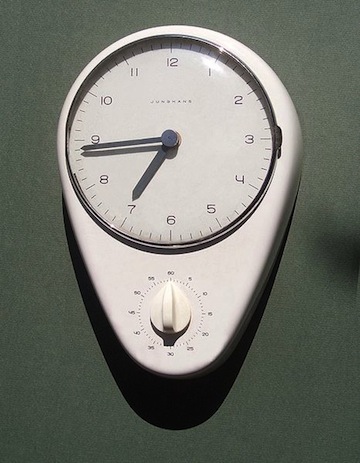
Junghans Kitchen Clock 1950s

Andy Warhol’s Pop Art

NOTE: Please notify us directly, if you believe that certain images on this post are alleged to infringe upon the copyrights of others, according to the Digital Millennium Copyright Act (DMCA). Thank you.

Opening Doors

Doors that celebrate Food!
Exterior doors may be the first thing you notice when you enter a house, but interior doors can be quite striking, especially when they’re magnificently crafted with some of the world’s most decorative materials – and wordings.

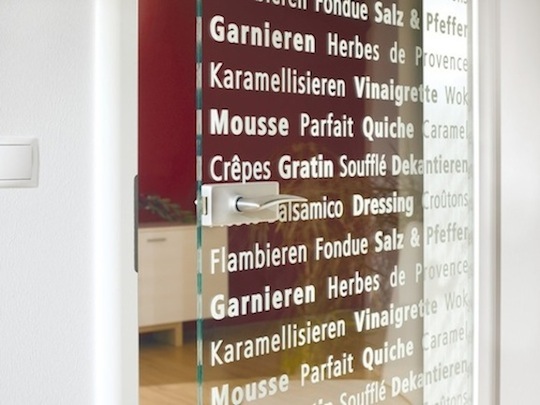
Satinato frosted culinaria edition


The unique Culinaria door collection from Bartels Doors comes in frosted and clear glass, and speaks to your senses in languages such as German, Italian, and French.   How fabulous! I adore this collection because since these are interior doors, the privacy issue is less important, and you get to add a polished decorative element in your kitchen.  The wordings on these high-end kitchen doors can help you make those dinner decisions without a moment’s hesitation. What’s on the menu today?  Onion potato gratin, quiche, crepes, or chocolate soufflé? The Culinaria door collection exudes the right amount of ambiance and influence your kitchen craves for.
Bartels Doors has been a leader in the custom door industry for over 10 years, providing the architecture and design communities with quality solutions for luxury interior doors and hardware proudly manufactured in Germany.  Designer frameless glass doors, like the Culinaria collection, make a grand statement and offer the right finishing touch to any design projects.  These doors are beautifully engineered and constructed to last.  But I also love Bartels popular modern barn door hardware ensembles, contemporary library ladders, shower enclosures, fashionable handles, award winning concealed Tectus hinges and laminated door collections.  Why not celebrate your creative personality while you’re cooking and eating in the kitchen with your friends and family?  Or while planning your next perfect gourmet meal?

Bartels Doors
Design Center of the Americas
1855 Griffin Rd, Suite A366
Dania Beach, FL 33004
Santinato detail
Culinaria Clear Glass

The Eiffel Tower for Auction

Like New York City is often defined by its tall sky scrappers, Paris is also defined by the magnificent Eiffel tower gracing the Parisian sky. The tower was originally build for the Exposition Universelle, a World’s Fair marking the centennial celebration of the French Revolution in 1889, and had a permit to stand for 20 years only. Can you imagine not being able to experience this architectural icon in the 21st Century?
Detail: A series of sketches have been uncovered by a young British student showing the building of the Eiffel tower. This picture shows the summit with stairs leading to the lighthouse at the very top.
This week, I was pleasantly surprised to find an article about a self-taught English artist by the name of Warwick Herbert Draper, who drew some of the most amazing sketches of the Eiffel tower as a young student.  These intricate sketches were drown between 1887 and 1890, when Draper was a student in the city of lights.  They came to life recently by his grandson John Ritchie who found them tucked away in a folder in the family ancestral home.  They will be auctioned at Duke’s of Dorchester on September 29, 2011. To read the complete article on Warwick Herbert Draper’s sketches, go to the Daily Mail UK.
Toil: A gang of riveters at work during the construction of the tower. Drawn in black pen, the 17 sketches show the entire process of the tower being built. 
(www.dailymail.co.uk) 
This drawing shows people entering their names at the Figaro newspaper office on the second level of the tower. 
(www.dailymail.co.uk)
The Eiffel tower remains the most popular paid-for tourist attraction in the world 
since it’s opening more than a century ago.

NOTE: Please notify us directly, if you believe that certain images on this post are alleged to infringe upon the copyrights of others, according to the Digital Millennium Copyright Act (DMCA). Thank you.

Jean Prouvé’s Industrial Furniture

French metal worker, Jean Prouvé was a self-taught architect and designer who would most likely always be remembered for his influence in the development of the idea of nomadic architecture, likening a chair to a house, and designing both with portability in mind.
Jean Prouvé bookshelf, 1953 

Above all, his main achievement was the ability to transfer manufacturing technology from industry to architecture, without losing aesthetic qualities. It’s also worth mentioning that he was an outstanding designer with many talents. From architectural design, industrial design, structural design right down to furniture design.

 Don’t forget to participate in our End of Summer Giveaways, listed here on High End Weekly™.

One of a kind cradle by Jean Prouvé, 1936
In Vogue
Popular Jean Prouvé Standard Chair Vitra (picture provided by nova68.com)
Jean Prouvé: Visiteur Lounge Chair 
(picture provided by wright20.com)
Jean Prouvé Compass desk 
Ateliers Jean Prouvé
Jean Prouvé table
Jean Prouvé Coffee Table, 1944
Jean Prouvé: Objects and Furniture Design By Architects

NOTE: Please notify us directly, if you believe that certain images on this post are alleged to infringe upon the copyrights of others, according to the Digital Millennium Copyright Act (DMCA). Thank you.

From Bauhaus to Our House

For me, the Bauhaus Movement has long been a fascinating, as well as a revolutionary one. Image what was going through most people’s minds when they first came across this minimalist aesthetic after being accustomed to a variety of ornate architecture and furniture designs. It must have been quite a shock! I wrote this article, nearly 10 years ago when I attended Parsons, and occasionally found myself referring back to it, either for design ideas or simply just because…

Oskar Schlemmer. Bauhaus Stairway. 1932. Oil on canvas
The Museum of Modern Art, New York. Gift of Philip Johnson.
© 2009 Estate of Oskar Schlemmer, Munich/Germany

“The greater the chaos in the outside world, the more people seek clarity, peace and order at home.”  These words were uttered by Wolfgang von Wersin in connection with the fact that after the First World War, German designers found themselves excluded on political grounds from the progress in the decorative and applied arts in Europe, and there were no longer wealthy clients abound wanting to have their villas built and furnished in luxury.  In 1919, an attempt to rectify these new challenges fell in the direction of a man by the name of Walter Gropius, founder of the Bauhaus Movement.

Bauhaus Master House

Marcel Breuer Tubular’s Stell Chair, 1926

Backtracking a bit, one could see how this stunning innovation took further roots.  Weimar, Germany was once a prominent literary city but fell out of grace in the 19th Century due to a virtual insignificance, and the beginning of cultural renaissance, and was brought forth by the design of the Nietzsche Archive in 1903 by the architect and designer, Henry van de Velde.  Van de Velve had made his name in his native Belgium in the 1890s.  He had spent some time in Paris, where the art dealer, Samuel Bing sought unsuccessfully to promote his talents in his gallery La maison de L’Art Nouveau, which also showed the work of other prominent designers of that time, and then moved to Berlin in 1900.
Walter Gropius’ house in Massachusetts

 In 1902, a Count Kessler, one of the most influential patrons of the Jugendstil (German Art Nouveau) invited van de Velde to Weimar as principal of the Grand Duchy of Saxony’s new School of Applied Arts.  He intended for this little regional capital to follow the Darmstadt model and become a center of progressive German art.  Van de Velde indeed brought a breath of fresh air into the little town stultified by conservative historicism.  He began by setting up craft workshops, assisting them financially with the proceeds from his many private commissions; and by placing his furniture orders with local artisans, such as the Scheidemantel firm, he helped them to achieve an undreamed-of prosperity.  It was van de Velde who, in 1915, suggested that Walter Gropius should establish a school providing artistic guidance for industry, trade and craft.
This institution eventually materialized as the Bauhaus, which was to be responsible for one of the most important chapters in the international history of design in the 20th Century.  At the Bauhaus institution, Mr. Gropius’ students were none others than the greatest painters, graphic designers and architects of his day.  The institution also contained a carpenter’s workshop, a metal workshop, a pottery, and facilities for paining on glass, mural painting, weaving, printing, wood and stone sculpting.  The Bauhaus institute flourished under such great artists, but it also generated a radical set of ideas.  What exactly were those ideas?
Well, the school aimed at dictating function alone and encouraged its students to work cooperatively and combine all of their skills.  There was no justification for decorative features, unless they were traditionally associated with a particular material or their application facilitated the production process and therefore fitted a practical purpose.  At the Bauhaus, Marcel Breuer and Mies van der Rohe produced some of the canons of modern furniture design – most notable in Breuer’s tubular steel chair, which became an icon of 20th Century design.

In was Walter Gropius himself who said, “The Bauhaus believes the machine to be our modern medium of design and seeks to come to terms with it.”  When one look at the interior of a Bauhaus building, one would see that an emphasis was placed on factory-produced designs that were simple, functional, and industrial.  The egalitarian philosophy espoused by the school embraced clean designs in basic materials, and this philosophy permeated all types of design, from furniture to textiles to applied art.
Alas, not all were in favor of these new ideas.  Stark white washed walls were perceived by some as “operating theater”; and some people at the time felt that they were entitled to art as well, and preferred the styles of the past.
Recommended Reading:  Bauhaus 1919-1933 by Magdalena Droste
                                      Bauhaus by Jeannine Fielder
                                      Design and Form:  The Basic course at the Bauhaus by Johannes Itten

NOTE: Please notify us directly, if you believe that certain images on this post are alleged to infringe upon the copyrights of others, according to the Digital Millennium Copyright Act (DMCA). Thank you.

Extravagant Textile

Création Baumann Fall 2011

Luxurious linen textile for the fall.  Eperla is this extravagant new laser cut fabric of coated linen cupro which captivates with its sumptuous material weight and harmony of its striking, yet timeless pearl design in the shape of a decorative border.
53″ wide in 2 colors.

Eperla

Elwin
The small, laminated wooden rods are arranged in horizontal and vertical patterns across the semi-transparent fabric as if they were floating above it. Elwin is available in two colors and combines well with the underlying fabric of Solare unis.
Elwood
With its intriguing interplay of materials and 3 D effect, Elwood is already in high demand. The laminated platelets in wood are cut and applied by hand. They spread in a strict and dense arrangement over the paper like backdrop
to form a second layer that moves. 
59″ wide available in 2 colors.

Création Baumann
To the trade only

Hellman-Chang: Made in Brooklyn

Hellman – Changs designs have long been the furniture of choice for some of my clients. So imagine how delighted I was to finally come across the design duo last May during the ICFF show in NYC.  Yes, I knew that each of their pieces were made by hand by their highly skilled craftsmen, but what I did not know was that the designers themselves took an active role with the making of every pieces that are made.
Hellman-Chang – Lucid Cocktail and Side Tables 
Their Brooklyn-based studio is not a crowded factory with assembly-line workers, but an inspiring workspace where timeless fabrication techniques are fostered.  All of their boldly designed, traditionally-crafted pieces are meant to last for generations, and embody the spirit of hand-built artisanship.  I like the fact that Hellman-Chang’s designs happen organically, through an intuitive process.  The result is contemporary, but livable, grounded in the natural beauty of the wood.  “It’s still design-conscious, but feels a little warmer,” explains Eric.  “While it’s good to push the conceptual envelope, our pieces are something you can see in your home.”
Lucid Cocktail Table

Lucid Side Table


Lucid Dining Table

Lucid is a new line of side, cocktail and dining tables incorporating along with their signature solid wood designs.  “The Lucid line was about playing with the perception of lightness and mass,” said Daniel Hellman.  The tables feature two sheets of Starphire glass encompassed by a “closed-circuit” solid wood frame.  The ultra-clear glass offers undistorted views of a rug or floor below, while allowing objects to float on the top and shelf surfaces.  “The ultra-clear transparency of the two sheets of Starphire glass creates a sense of weightlessness, while the proportion of the frame simultaneously gives it immediate presences,” Daniel said.  By using glass, Hellman-Chang has taken a step away from their classically wood-based design.  Daniel and Eric have maintained the warm, Zen-like aesthetic they are known for, while bringing attention to line and form.

Daniel Hellman and Eric Chang

The design duo is celebrating their fifth year of defining Brooklyn sophistication in luxury for high-end residential and hospitality environments.  Hellman-Chang furniture is designed and manufactured in their Brooklyn studio.  Their products are showcased in A. Rubin showrooms in New York, Los Angeles, San Francisco and Chicago, and in David Sutherland showrooms in Dania Beach, Florida; Dallas; and Houston.  Hellman-Chang furniture has been used in interiors of high-end hotels such as The Setai, The Cosmopolitan of Las Vegas, the Waldorf Astoria, the Ritz-Carlton, the Four Seasons and the InterContinental, as well as featured in such productions as Sex and the City 2 and Gossip Girl.

Sitting Pretty!

Timeless Beauties

Back in October of last year, I published this piece on Stylish By Design, and from time to time, I found myself going back to it, not just for the obvious design genius of Marcel Breuer, Eileen Gray, Thonet, and Le Corbusier (to name a few), but also to remind myself as to what a great chair should feel like. It does not matter what the chair looks like, it’s the way it makes you feel that is important.

This Michael Thonet’s Settee is quite at ease with both traditional, and modern interiors. The outline of this settee is simply beautiful. Bentwood is as modern then, as it is now.
The ULTIMATE in great design and comfort.
Eileen Gray Transat Chair
For a small and unobtrusive chair, the B-167-3 Lounge Chair by Pierre Paulin is unusually comfortable, not to mention inviting. The shape is much more functional than a casual inspection would suggest.
In contrast to Paulin’s chair, I find the Archair 12 by Poul Kjaerholm to be rather uncomfortable, as the back rung cuts painfully across the spine. But it is an absolute beauty. The chair is greatly influenced by Thonet’s bentwood forms, but it has it’s own and unique fresh take as a tubular steel.
No question, this chaise lounge by Le Corbusier is simply one of the classics for
complete, egocentric comfort.
The Wassily chair by Marcel Breuer was greatly influenced, believe it or not, by the colonial chairs of long ago. This is a welcoming and beautiful chair, both aesthetically and physcially satisfying.
T Chair by William Katavolos, Ross Litell, Douglas Kelly
In such a structure, this functional chair shows the results of imposing preconceived decisions on the logic of forms in combination
NOTE: Please notify us directly, if you believe that certain images on this post are alleged to infringe upon the copyrights of others, according to the Digital Millennium Copyright Act (DMCA). Thank you.

Swarovski Crystals in Home Décor


Swarovski crystals really shine when used in lighting fixtures such as chandeliers or pendants. This pendant light from David Malik is a simple form that highlights the strands of sparkling crystals.

And in case you were thinking you can find Swavorski crystals on everything but the kitchen sink… here is a simple white bathroom sink embellished with crystals. Bathroom light bounces off of these crystals nicely! There is also a matching bidet and toilet.


E X C L U S I V E
High End Weekly™ would like to thank Arcadian Lighting for writing this guest post, and look forward to collaborating with them in the future.
We’ve seen Swarovski Crystals sparkling on everything from phones to dog collars, jewelry to shoes. When it comes to home decor, Swarovski crystals can also add the same sparkle. You might be surprised to see where we’ve found crystals in home decor, from faucets to light fixtures, wall art to pillows. Swarovski crystals are a hot trend right now in high end home decor and furnishings. Here are eight ways Swarovski crystals will shine in the home.

Swarovski Crystals Lighting

Designed by Francesco Lucchese for Fabian, these contemporary lights featuring Swarovski crystals look more like sculptures than lighting fixtures. These are available in a pendant light, wall sconce and floor lamp in either black or matte glass.

Swarovski Crystals Lighting

This Italian design firm has a line of furnishings decorated with Swarovski crystals. The floor lamp, side table and leather ottoman are all embellished with crystals.  Look at how they dazzle!

Interior Concepts by Wanda
Small Swarovski crystals can be used to embellish textiles, including accent pillows. This one has a nice contrast between the crystals and linen cover.

Swarovski Crystals Carpet

A luxury carpet from Tappeti is sprinkled with Swarovski crystals. The twinkling crystals add sparkle to the carpet.

Swarovski Crystal Tiles
These tiles from Alfalux Ceramiche have Swarovski crystals embedded in a random pattern that imitates water droplets. A few of these tiles mixed in with plain tiles would add a subtle sparkle to the bath or powder room especially when lit from above by a crystal chandelier.

Swarovski Crystals Lighting
Swavorski crystals can be found embedded in bathroom fixtures, such as this faucet by Maier. This would be a glamorous addition to a powder room.

Swarovski Crystals Lighting

Content provided by Arcadian Lighting, a site that specializes in top quality lighting fixtures at extremely affordable prices. Come visit us today!

NOTE: Please notify us directly, if you believe that certain images on this post are alleged to infringe upon the copyrights of others, according to the Digital Millennium Copyright Act (DMCA). Thank you.